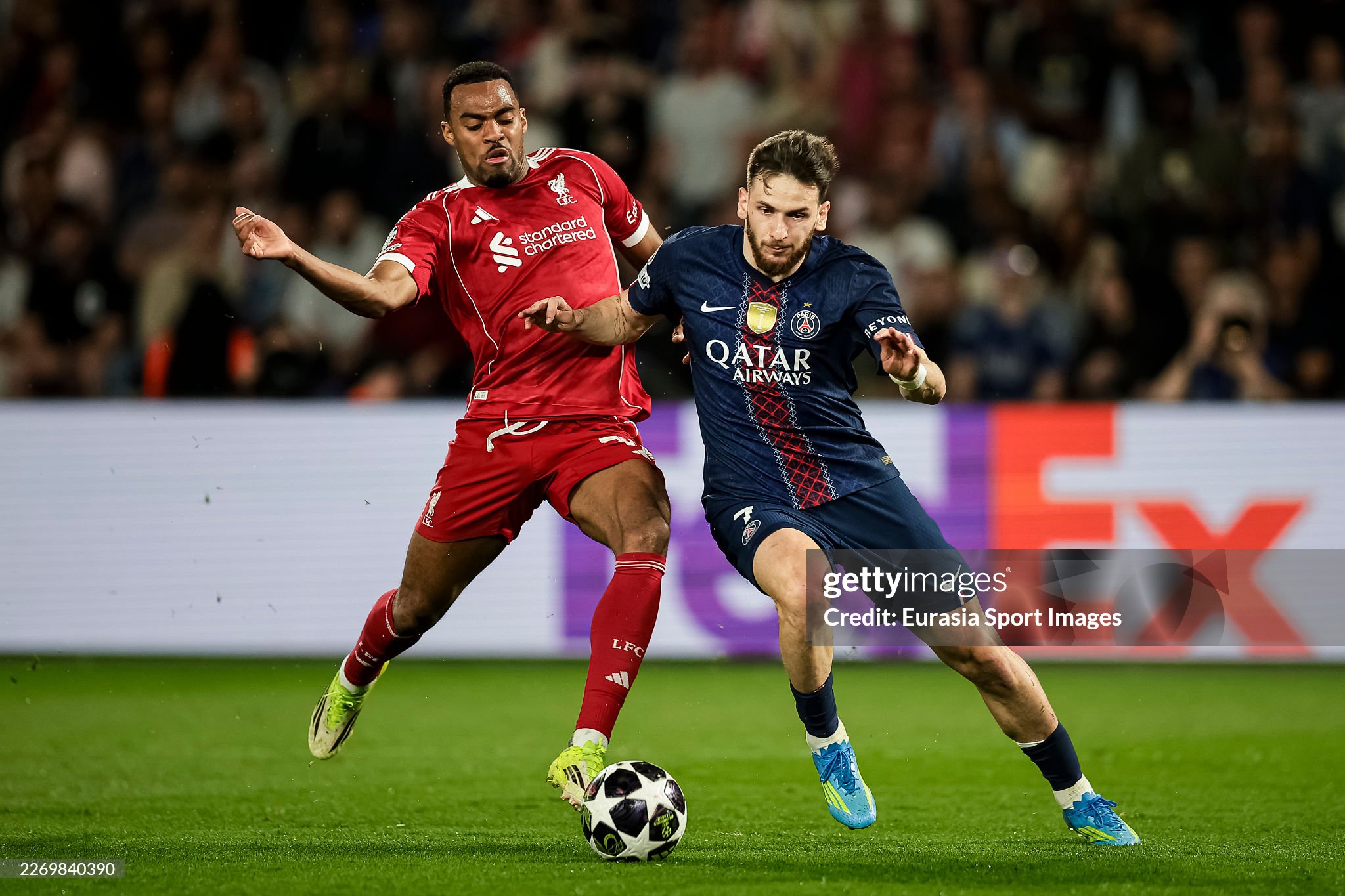
Liverpool lost the first leg 2–0. That is the most generous framing available. Because Liverpool did not really lose 2–0 at Parc des Princes. They were outpossessed 74 percent to 26, outshot 18 to 3, outshot-on-target 6 to 0, and outplayed so comprehensively that the scoreline now functions as an act of mercy from PSG rather than a fair reading of the ninety minutes. Arne Slot said afterwards they were lucky not to lose by more. He was not being modest. He was being accurate.
The second leg is at Anfield. And because it is at Anfield, there is still a conversation to be had. But the conversation that matters is not about tactics, or substitutions, or whether Isak starts. It is about whether a side that has spent the better part of nine months being slowly unmade has anything left to pretend otherwise for ninety minutes in front of its own supporters. That is the real question of this tie. Everything else is noise.
The Structural Breakdown
Things are bad because Liverpool played badly. They did not have a single shot in the first half. They managed three shots all game, none on target. They ended with 26 percent possession. They completed around a third of the passes their opponents did. They were on the wrong side of the duels numbers and the tackles numbers. They were cagey. They were passive. They played for 0–0 and were still lucky to lose only 2–0.
But the more revealing number is not from this match. It is from the season as a whole. Liverpool arrived in Paris having lost three consecutive away games in all competitions. They arrived two weeks after a 4–0 dismantling by Manchester City in the FA Cup in which Mohamed Salah saw a first-half penalty saved by James Trafford. Slot dropped Salah to the bench at Parc des Princes and did not bring him on. You do not drop your best player against the champions of Europe unless you have lost faith in him, or in the system that requires him to function. Probably both.
The structural problem is now visible in nearly every tactical decision this team makes. Slot set up with a back three in Paris, a shape he has used only sporadically this season, explicitly to stop PSG scoring. It was an admission. A back three for Arne Slot, whose entire managerial identity has been built around four-two-fours and front-foot pressing, is the football equivalent of writing "we cannot win this" on the tactics board before kickoff.
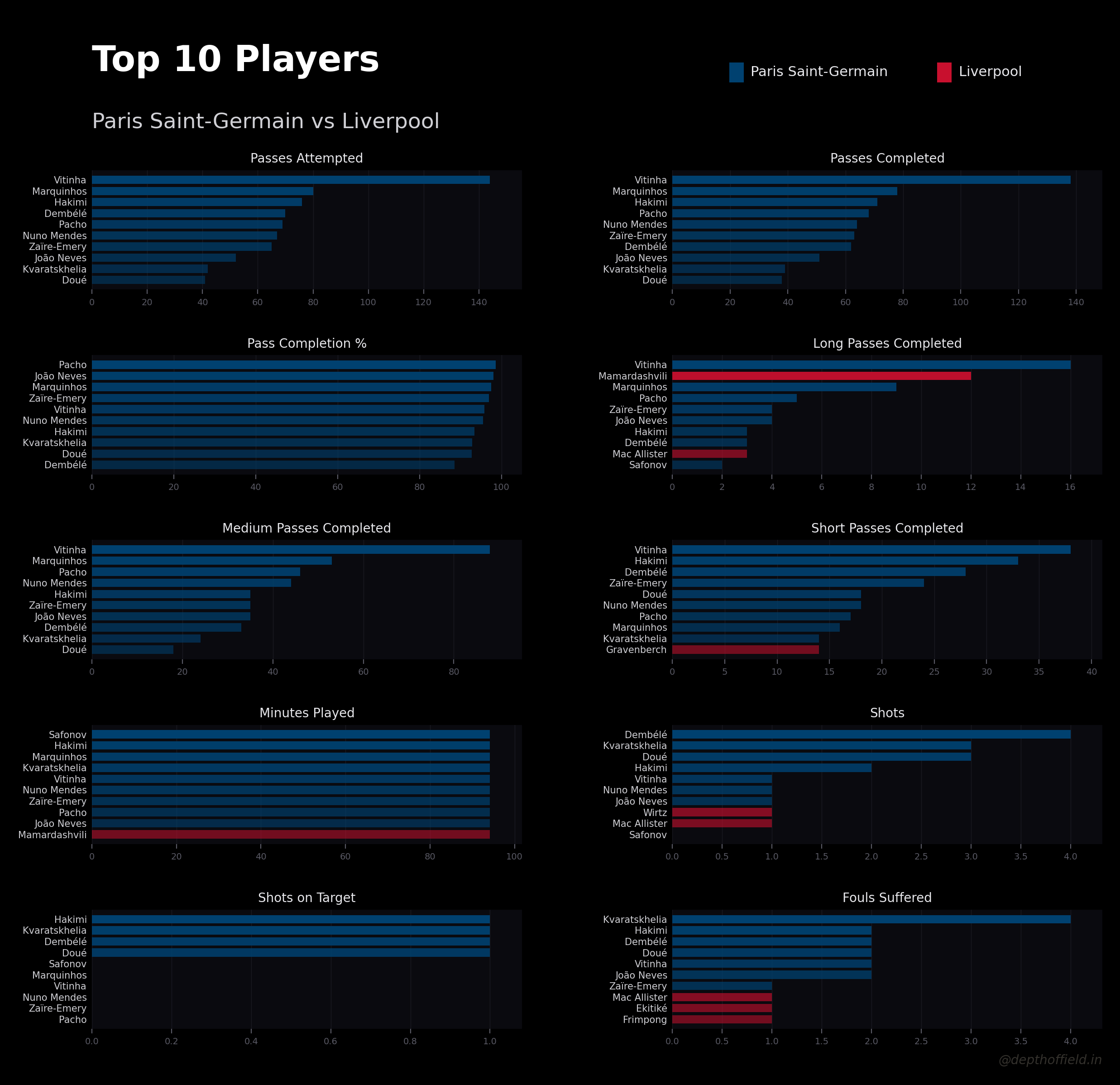
The graphic above is the tactical story in one picture. Across the ten metrics shown, Liverpool appear in the top ten in only four panels — and three of those appearances are for having been on the pitch long enough, having long-kicked the ball, or having been fouled. Mamardashvili, Liverpool's goalkeeper, is their second-highest ranked passer in the long-passes panel. Every other PSG outfield player passed the ball more than every Liverpool player except Mamardashvili. Liverpool did not have a single player in the top ten for passes attempted, passes completed, or medium passes. The emptiness of those panels is not a graphical accident. It is the shape of a team that never had the ball.
The Decisions That Told You Everything
Arne Slot's starting eleven in Paris is, at this point, the clearest existing document of how bad the season has been. Salah on the bench. Isak, back from injury, also on the bench. A back three. Wirtz — the attacking midfielder who has been the one bright Liverpool signing of the year — starting wide rather than central. The message the shape sent to PSG was: we are here to concede control and hope to steal something. PSG heard that message and set about proving Liverpool had no plan for what to do when the stealing did not come.
The substitutions made it worse. Five changes by the 79th minute, none of them tactical resets — all of them damage limitation. Gakpo for Wirtz, Isak for Ekitiké, Robertson for Kerkez, Jones for Szoboszlai. These are not decisions made by a manager confident in his squad or his system. They are decisions made by a manager who no longer knows which combination of players will give him ninety minutes of organised football. At some point in this season, Slot stopped picking his best team and started picking whichever team looked least likely to embarrass him. The consensus around Liverpool now is that this may not be a situation from which he returns.
The Psychology of the Tie
And yet, they are only 2–0. The second leg is at Anfield. Somehow, this tie still exists.
That is the perfect encapsulation of Liverpool's season. The weeks keep passing, the mediocre performances keep piling up, the structural decline looks irreversible — and yet every time the results are bad enough that you think the spell is finally broken, there is always just enough there, just barely, that if you squint you can convince yourself it all turns around next match. Until it does not. Then the cycle starts again. Liverpool have become a club that runs on the thin possibility of a comeback that never quite comes.
Anfield in 2005 against Milan. Anfield in 2019 against Barcelona. Anfield is the stadium in which this club's entire modern identity has been made, and those two nights are the nights that every Liverpool fan quietly holds in reserve for exactly this kind of situation. Two goals down after the first leg. A European heavyweight on the other side of the tunnel. A tactical mismatch that looks insurmountable on paper. It has happened before, and the thing about Anfield is that it does not need the data to be on its side — it needs the belief, and the belief needs the players to create the half-chance that gives the crowd something to hold onto for the last thirty minutes.
The problem is that the data and the squad and the manager and the mood all suggest that the current Liverpool does not have the ingredients for that kind of night. An Istanbul or a Barcelona does not happen to a team playing a back three in fear at Parc des Princes a week earlier. It happens to teams that still believed they were good before the first leg started. Liverpool have not played like they believe they are good since November.
What to Watch For
Slot's only plausible path back into this tie is to abandon the caution that defined Leg 1. Salah must start. Isak must start. The back three must go. Liverpool must press high from the first minute and accept that if PSG break them, the tie ends on the counter — because the tie is already ending on the slow version of the same breakdown if Liverpool play like they did in Paris.
If Slot instead starts carefully, waiting for the crowd to manufacture the moment, PSG will do to Liverpool at Anfield exactly what they did to them at Parc des Princes: hold the ball, rotate in midfield, wait for Kvaratskhelia to pick a pocket. Except this time, with a two-goal cushion, Luis Enrique will not even need to chase a third. PSG will happily play for the 0–0 that sends them to the semi-finals. And that, for a club that has built its European identity on forcing opponents out of their comfort zone, would be the most damning result of all.
Prediction: Liverpool 1–2 PSG.
Do you agree?
Liverpool score a consolation in front of the Kop, PSG play the game at exactly the tempo they want, and the Parc des Princes tie is effectively closed out by the hour mark. Slot leaves the pitch to scattered applause and a lot of silence. What happens next for him is, at this point, probably out of his hands.
A comeback from 2–0 against this PSG side requires a level of freedom and intensity that Liverpool have not shown all season — a bigger ask than any tactical adjustments Slot can make.